Valves Used in District Cooling Systems: Types, Functions, and Selection Criteria
Imagine a whole neighborhood cooled from one giant "AC unit" buried somewhere out of sight, with cold water flowing through underground pipes to every building instead of everyone running their own air conditioner. That's district cooling, and it works a lot like your city's water supply, except instead of drinking water, it's chilled water that keeps buildings cool.
But none of that water goes anywhere on its own. Something has to open the path, close it off, or control how much flows through, and that's the job of a valve. The valves used in district cooling systems are the switches and taps of the whole network, and if they're not chosen or placed correctly, the entire system struggles no matter how good the cooling plant is.
Types of Valves Used in District Cooling Systems
Think of a district cooling network like a city's road system. Some valves work like on/off gates, some work like traffic signals that adjust flow, and some work like the toll booths that keep everything moving evenly. In district cooling applications, each valve has one specific job, and the system only works well when every valve is doing the job it's actually built for.
Here's a simple look at the valves used in district cooling systems, explained the way you'd explain them to a friend who has no idea what a valve even does, and where each one shows up on a district cooling piping system.
Butterfly Valves for Large-Diameter Chilled Water Isolation
Picture a round disc sitting inside a big pipe, like a small door that swings open or shut. That's a butterfly valve, and it's used to completely block off large pipes, the kind you'd find carrying water to an entire block of buildings. It's light, quick to open or close, and doesn't take up much space, which matters a lot when pipes are this big.
Ball Valves for Compact On-Off Isolation
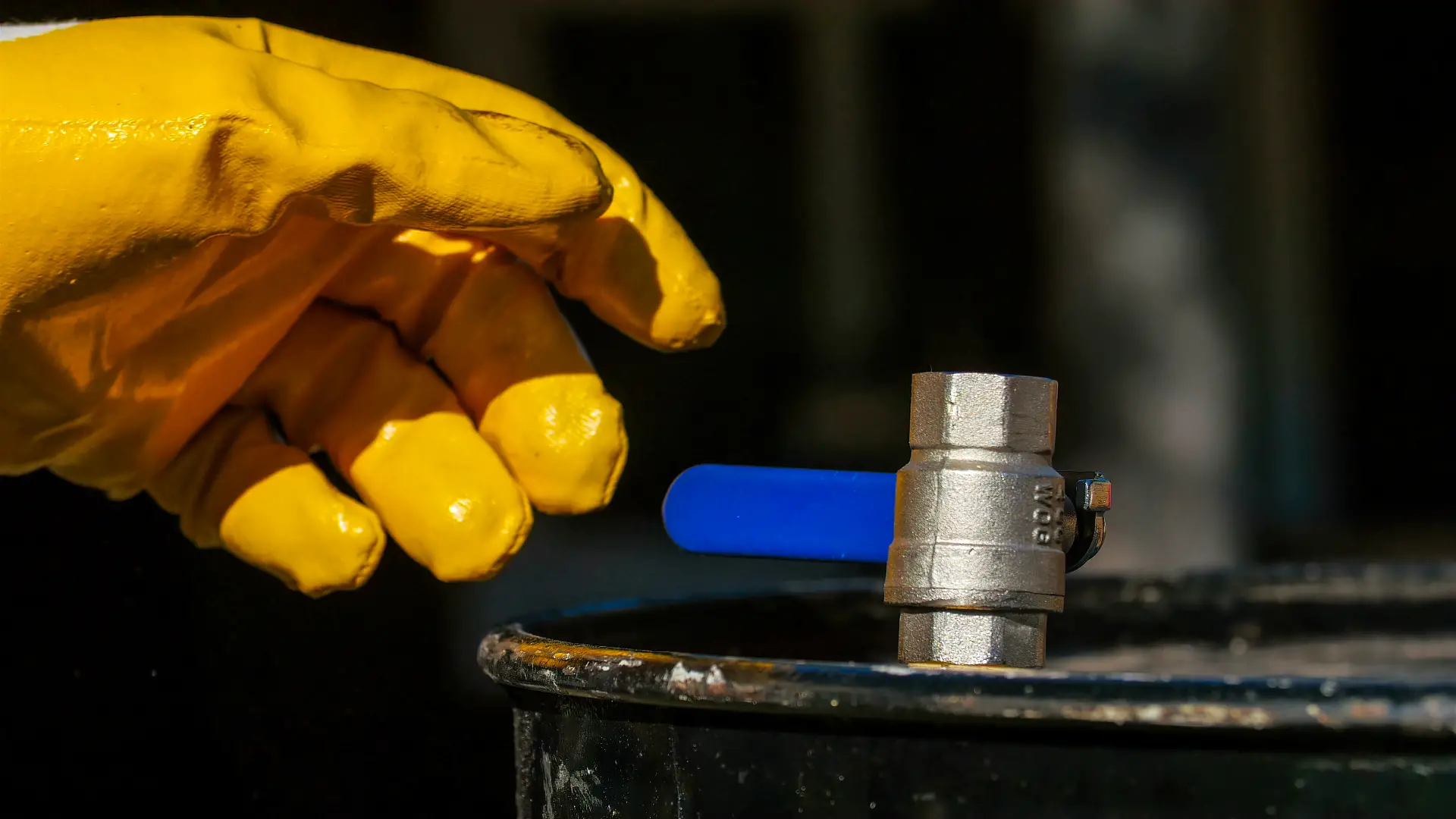
A ball valve works almost exactly like the tap under your kitchen sink, just bigger and tougher. Inside sits a ball with a hole through the middle, and turning it a quarter turn either lines up the hole with the pipe (fully open) or blocks it completely (fully shut). These are used on smaller pipes where a tight, no-leak shutoff matters more than sheer size.
Gate Valves for Full-Bore Isolation
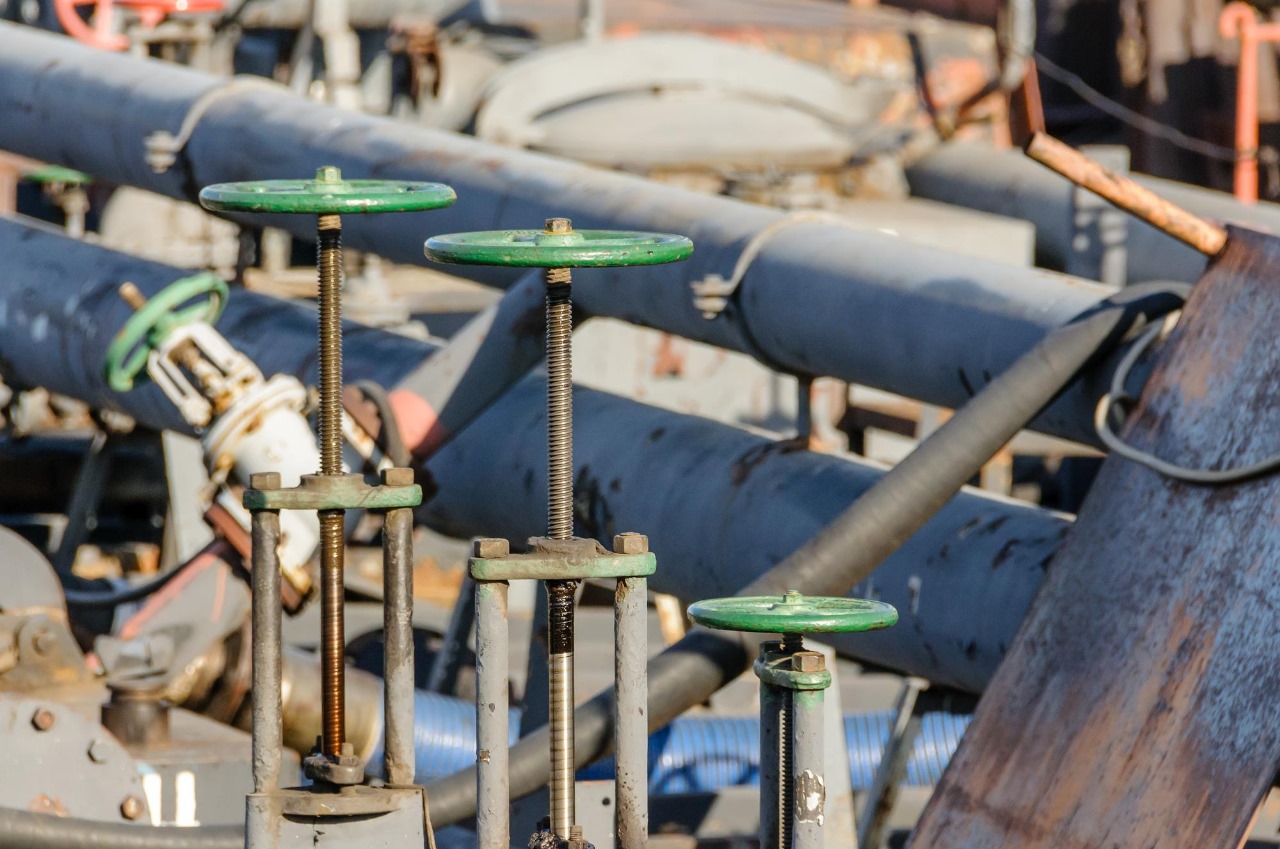
A gate valve works like a small door sliding up and down inside the pipe, similar to a sluice gate on a canal. It takes a bit longer to open or close than the valves above, so it's mostly used where a section of pipe only needs to be shut off occasionally, like during planned maintenance.
Check Valves for Preventing Reverse Flow
A check valve only lets water flow in one direction, the same way a one-way street only lets cars go one way. If water tries to flow backward, maybe because a pump switches off or pressure changes somewhere in the system, the valve automatically shuts and stops it. You'll usually find these right where pumps push water into the main pipes.
Globe Valves for Modulating Flow
A globe valve is built for fine adjustments, more like a dimmer switch than an on/off light switch. Water has to travel through a curved, S-shaped path inside the valve, and that design lets an engineer fine-tune exactly how much flow gets through. It's used less often than the others, mainly in spots where precise manual adjustment matters more than saving energy.
Control Valves for Automatic Flow and Temperature Control
The control valves district cooling buildings rely on are the automatic version of a globe or ball valve, hooked up to a small motor and a computer system. Instead of a person turning a handle, a sensor tells the valve how much to open or close based on how much cooling a building actually needs at that moment. As demand changes through the day, the valve quietly adjusts itself, no manual effort involved.
Balancing Valves for Hydronic Flow Balancing
Here's a problem you might not expect: the building closest to the cooling plant can accidentally "steal" more cold water than it needs, leaving buildings further away short on cooling. The balancing valves HVAC teams install fix exactly this, working like a traffic officer making sure water is shared fairly across the whole network, not just grabbed by whoever is nearest the source.
Pressure Independent Control Valves (PICVs) for Variable-Flow Systems
A PICV is basically two valves rolled into one part, a control valve and a balancing valve working together. No matter how much the pressure in the pipes changes elsewhere in the building or network, this valve keeps the flow to its section steady and predictable. Think of it as cruise control for water flow, it holds a steady pace even when the road (or in this case, the pressure) changes underneath it.
How Does a District Cooling Valve System Work?
To really understand how valves used in district cooling systems come together, picture cold water, chilled down to about 6°C, leaving the central plant and being pushed out through big underground pipes by powerful pumps. Along the way, isolation valves like butterfly and gate valves sit at every junction, ready to block off a section if repairs are needed, without shutting down cooling for everyone else. When that cold water finally reaches a building, it flows into something called an energy transfer station, which is basically the building's connection point to the whole network, and from there it spreads out to cool individual floors and rooms.
This is where things get clever. Control valves and PICVs are constantly listening to signals from the building's control system, opening a little wider when a floor is warm and easing back when demand drops, all without anyone touching them. Meanwhile, balancing valves are quietly doing their job in the background, making sure a building sitting right next to the plant doesn't hog all the cold water while a building three kilometers away is left waiting.
Here's something most people never notice: everyone assumes the chillers are the "brain" of a district cooling system because they're the biggest, loudest machines in the plant. In reality, the valves are what actually decide whether that cold water reaches the right building, at the right amount, at the right time. That's really what makes district cooling valves so important, even though they're easy to overlook. One simple way to tell if everything is working properly is to check the water coming back to the plant. It usually returns at around 14 to 16°C, which is roughly 8 to 10 degrees warmer than when it left, and that warm-up is proof the system did its job of pulling heat out of the buildings.
What Does Each Valve Do in a District Cooling System?
| System Function | Valve Type | What the Valve Controls | Typical Location |
| Shutting off large sections | Butterfly Valve | Turning flow fully on or off in big pipes | Main pipes, junctions between sections |
| Shutting off small sections | Ball Valve | Tight, leak-free on/off control | Building connections, small instrument lines |
| Occasional full shutoff | Gate Valve | Blocking flow with almost no resistance when open | Large transmission pipes |
| Stopping backward flow | Check Valve | Letting water flow in one direction only | Right after pumps, where supply lines meet |
| Manual fine adjustment | Globe Valve | Precise, hand-adjusted flow control | Bypass lines, test and inspection points |
| Automatic flow adjustment | Control Valve | Flow that responds to a building's cooling demand | Building connection points, AC unit coils |
| Fair sharing of flow | Balancing Valve | Even distribution of water across the network | Pipe branches, individual floor connections |
| Steady flow no matter what | PICV | Constant flow even when pressure changes | Individual AC units and cooling coils |
Where Are Different Valves Used in District Cooling Infrastructure?
At the central plant itself, you'll find the biggest, heaviest valves in the whole system. Large butterfly and gate valves sit around the chillers, pumps, and storage tanks so any one piece of equipment can be shut off and repaired without turning off cooling for the entire city. Further out, along the main pipes running under streets and between neighborhoods, more butterfly valves are placed at every junction, letting operators isolate a single street or district if something needs fixing, instead of cutting cooling to everyone.
Once the network reaches an actual building, the type of valve changes to match a more detailed job. Ball valves handle the building's main shutoff point, control valves and PICVs manage how much cold water goes to specific air conditioning units, and balancing valves sit along the risers going up through the floors, making sure the top floor gets the same fair share of cooling as the ground floor.
How Do You Select Valves for a District Cooling System?
Choosing the right valves used in district cooling systems call for isn't about grabbing whatever fits the pipe size at the lowest price. A valve has to work reliably for years under real conditions, and getting the choice wrong doesn't just cost more later, it means leaks, poor cooling control, or a valve that needs replacing far sooner than it should.
Here's what actually matters when making that choice:
Operating Pressure Requirements
Every valve has a maximum pressure it can safely handle, and pushing it close to that limit day after day wears it out faster. It's worth checking not just normal operating pressure but also sudden pressure spikes, since those can do more damage than steady pressure ever will.
Flow Rate and Capacity
Just because a valve fits a certain pipe size doesn't mean it can actually move the right amount of water through it. A valve that's too small creates unnecessary strain on the whole system, while one that's too big becomes hard to control accurately.
Temperature Conditions
Chilled water usually stays cold, but during startup, shutdown, or certain bypass situations, temperatures can shift more than expected. The valve's internal seals need to keep sealing properly no matter which end of that range it sees.
Pipe Size and Configuration
It's not just about the pipe's width, what's around the valve matters too. A valve placed too close to a bend or a joint can experience rough, uneven flow, which throws off both its accuracy and its lifespan.
Energy Efficiency Requirements
Every valve slows water down a little as it passes through, and that resistance means the pumps have to work a bit harder. Choosing valves designed to create less resistance keeps energy bills lower across the whole network, year after year.
Maintenance Accessibility
A valve tucked away somewhere hard to reach turns a quick, simple repair into a much bigger, more expensive job. Thinking ahead about where a technician will actually need to stand to service it saves real time and money down the line.
Automation and Control Requirements
Not every valve needs to be automatic, but the ones connected to the building's control system do, and they need to speak the same "language" as that system. When they don't match up properly, it causes a lot of unnecessary troubleshooting during setup.
Lifecycle Cost Considerations
What a valve costs to buy is just the beginning. Over ten or twenty years, things like energy use, how often it needs servicing, and how long it lasts before replacement usually matter far more than the price tag on day one.
How Are Control Valves and PICVs Selected for Chilled Water Systems?
Control valves and PICVs are trying to solve the same basic problem, just with different levels of sophistication. A regular control valve opens and closes based on a signal from the building's system, but how much water actually flows through it still depends on the pressure at that exact moment, which can shift depending on what else is happening in the building. A PICV does the same basic job, listening to the same kind of signal, but it has a clever built-in mechanism that keeps the flow steady no matter what the pressure is doing around it.
A regular control valve tends to work fine in smaller, simpler buildings where the pressure stays fairly predictable and easy to plan for. PICVs become far more useful in bigger, busier buildings where chilled water system valves are constantly competing with each other for the same pump pressure across many different floors and zones. Real-world studies looking at actual building data have found that switching to PICV-based control can cut energy use by close to 12% compared with standard valves, while also keeping indoor temperatures more consistent for the people inside.
So which one should a project use? It really comes down to how complicated the building's cooling network is and how much the pressure tends to swing during normal daily use. A small building with one simple loop usually does fine with a good standard control valve. A large tower or campus with many separate zones competing for the same water supply usually benefits enough from a PICV to justify the extra cost. The real question isn't which valve is cheaper, it's whether the building can handle uneven flow without people complaining about comfort or the energy bill quietly creeping up.
What Valve Materials Are Suitable for District Cooling Applications?
Choosing the material for HVAC valves is a balancing act between how well it resists corrosion, how much it costs, and how long you want it to last before needing a replacement.
| Material | Corrosion Resistance | Relative Cost | Typical Considerations | Suitable Applications |
| Cast Iron | Moderate | Low | Can corrode over time in treated water, often needs an internal lining | Larger valve bodies for isolation |
| Ductile Iron | Good | Low to Moderate | Stronger and better at resisting corrosion than plain cast iron | Butterfly and gate valve bodies, main pipes |
| Carbon Steel | Good | Moderate | Needs a protective coating for long-term contact with water | Bigger pipes, high-pressure sections |
| Stainless Steel | Excellent | High | Holds up well against pitting and chemical wear from treated water | Control valves, PICVs, sensitive points in the system |
| Bronze / Brass | Good | Moderate | Easy to machine, needs the right alloy to avoid slow metal loss over time | Small ball valves, check valves, instruments |
| PVC / CPVC (trim only) | Excellent | Low | Only suitable for low-pressure, non-structural parts | Seat inserts, small bypass lines |
How Should District Cooling Valves Be Sized?
Sizing a valve properly means starting with how much water actually needs to flow through that exact point in the system, not simply matching it to whatever pipe size happens to be there. Engineers work out the flow the valve needs to handle and how much pressure drop is acceptable, then pick a valve that stays easy to control across most of its opening range, rather than one that only performs well when almost fully open or almost fully shut. It might feel safer to pick a bigger valve "just in case," but an oversized valve usually ends up sitting mostly closed, which makes it harder to control accurately and wastes the money spent on it.
What Are the Most Common Valve Selection Mistakes in District Cooling Projects?
Even teams who've done this many times before tend to repeat the same few mistakes when choosing valves for a chilled water system, and most of these mistakes trace back to shortcuts taken early on. None of them cause problems immediately, they usually show up months or years later as poor cooling control, higher energy bills, or valves failing sooner than expected.
Here's where things most often go wrong:
Choosing a Valve Based Only on Purchase Price
The valve with the lowest price tag often ends up costing more overall once you add up wasted energy and how soon it needs replacing.
Selecting the Valve by Pipe Size Without Checking Capacity
Matching a valve to the pipe's width doesn't guarantee it can actually handle the amount of water the system needs moved through it.
Ignoring Pressure Drop and Valve Authority
A valve that doesn't have enough control over its section of the system ends up working against the rest of the network instead of managing it properly.
Oversizing Control Valves
A control valve that's too big spends most of its time barely open, which is exactly where it's hardest to control accurately.
Using a Valve Outside Its Pressure or Differential Pressure Range
Pushing a valve beyond the pressure it's rated for wears down its internal parts faster and can cause it to fail long before it should.
Selecting Materials Without Considering Water Chemistry
Treated water isn't the same everywhere, and picking the wrong material for local water conditions can shorten a valve's life significantly.
Overlooking Actuator and BMS Compatibility
If the automatic parts of a valve can't properly talk to the building's control system, that "smart" valve basically becomes a manual one.
Making Maintenance Access an Afterthought
A valve installed somewhere hard to reach turns every future repair into a bigger hassle than it needs to be.
How Do Valves Affect District Cooling System Efficiency?
Every single valve in the network creates a small amount of resistance as water passes through it, and all that resistance adds up to extra work for the pumps. Valves that are chosen and sized correctly keep this resistance as low as possible while still giving operators the control they need, which keeps energy costs down over the years. Valves that are poorly chosen do the opposite, either forcing pumps to push harder than necessary or letting water flow unevenly, so some buildings end up under-cooled while others use more than their fair share, and either way, the whole system ends up working less efficiently than it should.
How Should District Cooling Valves Be Maintained?
A valve that's never checked doesn't just quietly wear out, it tends to fail at the worst possible moment, usually during the hottest days when cooling demand is highest. Regular, simple checks catch small problems early, long before they turn into a bigger issue that affects an entire building.
Here's what a good maintenance routine actually looks like:
Inspect Valve Bodies, Connections, and Actuators
A quick visual check can spot rust, loose bolts, or a motor starting to wear out before it becomes a real problem. Doing this on a set schedule, rather than only reacting when something breaks, keeps small issues from turning into shutdowns.
Check for Leakage and Abnormal Operation
Even a tiny leak wastes energy nonstop and often means a valve is getting close to the end of its useful life. Strange noises or shaking during operation are usually the earliest sign that something's off.
Verify Valve Position and Control Response
Checking that a valve actually opens and closes all the way, and does it within the expected time, helps catch small problems with its motor before they affect cooling control. This matters most for valves connected to automatic systems.
Check Actuator and BMS Communication
A valve that's lost communication with the building's control system can sit stuck in the wrong position for weeks without anyone realizing it. Regular communication checks catch this kind of silent failure before people start complaining about comfort.
Recalibrate Control and Balancing Devices
Over time, the settings on control and balancing valves can drift slightly away from where they should be, so recalibrating them keeps the whole network properly balanced. This is especially worth doing after any changes are made to the piping.
Plan Replacement Before Valve Failure
Keeping track of how old a valve is and how well it's performing lets a building replace it on a planned schedule instead of scrambling during an emergency. Planned replacement is almost always cheaper and far less disruptive than an unplanned one.
Conclusion
Choosing valves used in district cooling systems really comes down to a simple idea: use the right type of valve, whether it's for shutting off flow, balancing it, or controlling it, and make sure it's sized correctly for the pressure and flow it will actually experience. Get this right, and the system runs smoothly for decades. Get it wrong, and even the best-built cooling plant will struggle with poor control, wasted energy, and valves that fail sooner than they should.
That's exactly the standard we hold ourselves to at Alkun Steel. We supply industrial valves for cooling systems and the fittings that go with them to projects across the region, and over the years, we've seen firsthand just how much a well-planned valve setup improves a project's long-term performance. If you're working on a new district cooling network or looking to upgrade valves on an existing one, we're always happy to talk through the details with you.
FAQs
1.Which valves are commonly used in district cooling systems?
Butterfly, ball, gate, check, and globe valves, plus control valves, balancing valves, and PICVs, each play a different role in the network.
2. What is the most suitable valve for large chilled water pipelines?
Butterfly valves are the go-to choice for big pipes because they're compact, light, and easy to operate.
3. What is the difference between a balancing valve and a control valve?
A balancing valve is set once to a fixed flow rate, while a control valve automatically adjusts itself based on real-time cooling demand.
4. What is a PICV and when is it used?
It's a valve that combines control and balancing in one unit, ideal for buildings where water pressure keeps changing.
5. Can butterfly valves be used for flow control?
They can adjust flow a little, but they're not as precise as a dedicated control valve for fine-tuned adjustments.
6. Why is valve sizing important in chilled water systems?
The right size keeps flow easy to control and avoids the wasted energy or poor performance that comes from a valve being too big or too small.
7. Does the valve size have to match the pipe size?
Not necessarily. Valve size should be based on how much water actually needs to flow, not just the pipe's diameter.
8. What factors should be considered when selecting district cooling valves?
Pressure, flow needs, temperature range, the right material, and how easy the valve is to maintain all play a part.
Related Articles
Threaded vs Socket Weld vs Butt Weld Fittings: Which Is Right for Your Project?
Read More
Carbon Steel vs Stainless Steel Pipes: Cost, Performance, and Application Comparison
Read More



How Fire Fighting Valves Ensure Safe and Efficient High-Pressure Water Systems
Read More




Stainless Steel Buttweld Fittings For Offshore Shipbuilding And Platform Piping
Read More
Industrial Valves, Hoses & Gaskets: Alkun Steel’s Solutions for the Tanks & Pumps Industry
Read More
Corrosion-Resistant Valves, Flanges & Joints: Alkun Steel’s Petrochemical Solutions
Read More

Why Alkun Steel Is A Reliable Supplier Of Essential Products In The Oil Drilling & Rig Industry
Read More


Reliable Industrial Components For Fire Fighting Applications: Alkun Steel’s Trusted Solutions
Read More
Why Alkun Steel Is A Reliable Supplier Of Essential Products In The Fabrication Industry
Read More

Industrial Valves, Hoses & Gaskets: Alkun Steel’s Solutions For Aviation Maintenance
Read More

Best Weld Neck, Slip-On, And Blind Flanges For Critical Oil & Gas Connections
Read More
Best Industrial Fasteners for Heavy Equipment Assembly and Structural Steel Projects
Read More