Carbon Steel vs Stainless Steel Pipes: Cost, Performance, and Application Comparison
Every industrial project eventually comes down to a handful of decisions that quietly decide whether it succeeds or drains the budget for years. Choosing between carbon steel and stainless steel pipes is one of those decisions, and it rarely gets the attention it deserves. Get it right and the system runs for decades with few issues; get it wrong and you are looking at leaks and replacements nobody planned for.
Carbon steel vs stainless steel pipes is a debate that comes up on almost every procurement call, and for good reason. Both materials do the same basic job of moving fluids and gases, yet they behave completely differently once real pressure, heat, or corrosive fluid enters the picture. The material you pick shapes everything from your upfront budget to how often your maintenance team gets called out.
This guide gives you a clear look at how carbon steel and stainless steel pipes compare and how to choose the right one for your project.
Carbon Steel vs Stainless Steel Pipes: Key Differences at a Glance
| Feature | Carbon Steel Pipes | Stainless Steel Pipes |
| Initial Cost | Lower | Higher |
| Corrosion Resistance | Moderate, needs coating | Excellent, naturally resistant |
| Strength | Very high | Good, strong but slightly less raw strength |
| Weight | Heavier | Comparatively lighter for the same job |
| Maintenance | Regular coating and inspection | Minimal upkeep |
| Lifespan | Shorter without protection | Longer, especially in harsh conditions |
| Temperature Resistance | Excellent for high heat | Strong across hot and cold extremes |
| Pressure Capability | Very high | Good, though not always the top priority |
| Weldability | Easy, standard methods | Needs more specialized welding |
| Best Applications | Oil and gas, structural, high-pressure systems | Food, pharma, marine, chemical processing |
What Are Carbon Steel Pipes?
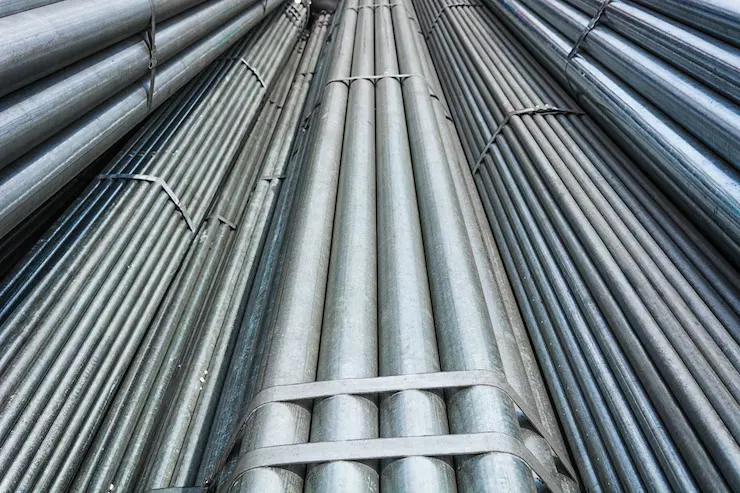
Carbon steel pipes are pipes made mostly from iron and carbon, with the carbon content giving the material its strength. Depending on how much carbon is added, the steel is classified as low, medium, or high carbon, each suited to a different level of demand. Because they are affordable, strong, and easy to work with, carbon steel pipes are one of the most widely used pipe materials in industrial projects today.
Advantages of Carbon Steel Pipes
- High tensile strength for demanding pressure loads
- Lower cost compared to most alloy and stainless options
- Easy to weld and fabricate on site
- Wide availability across sizes and grades
Limitations of Carbon Steel Pipes
- Prone to rust without coatings or linings
- Not ideal for corrosive or highly humid environments
- Heavier than some alternative materials
- Needs ongoing maintenance to prevent degradation
Common Industrial Applications
Carbon steel pipes show up across a wide range of heavy-duty industries. Common uses include:
- Oil & Gas: transporting crude oil and natural gas across long distances
- Fire Protection Systems: high tensile strength holds up under constant pressure
- Structural Applications: framing and load-bearing supports on site
- Industrial Utilities: steam and water distribution across a plant
- Power Generation: boiler systems and high-temperature steam lines
What Are Stainless Steel Pipes?
Stainless steel pipes are made from iron combined with a significant share of chromium, usually above ten percent, along with smaller amounts of nickel or molybdenum in certain grades. That chromium reacts with oxygen to form a thin, protective layer on the surface, which is what gives stainless steel its resistance to rust. The result is a pipe material built to handle moisture, chemicals, and hygiene-sensitive environments without breaking down over time.
Advantages of Stainless Steel Pipes
- Outstanding resistance to rust and corrosion
- Long service life with minimal upkeep
- Naturally hygienic surface that is easy to clean
- Holds up well in both hot and cold conditions
Limitations of Stainless Steel Pipes
- Higher upfront cost than carbon steel
- Requires more specialized welding
- Slightly lower raw strength in some grades
- Longer lead times for certain specifications
Common Industrial Applications
Stainless steel earns its keep in industries where cleanliness and corrosion resistance cannot be compromised. You will find it in:
- Food & Beverage Processing: keeps products free of contamination
- Water Treatment: withstands chemical dosing without breaking down
- Marine Industry: resists saltwater and chloride exposure
- Chemical Processing: handles aggressive and corrosive substances
- Pharmaceutical Manufacturing: meets strict hygiene requirements
Cost Comparison: Carbon Steel vs Stainless Steel Pipes
Cost is usually the first factor procurement teams look at, and the two materials sit at very different price points.
- Carbon steel pipes cost noticeably less to produce and purchase, which makes them the go-to choice for large-scale, budget-conscious projects.
- Stainless steel pipes carry a higher price tag because of the chromium and other alloying elements involved, though that cost often balances out through lower maintenance over time.
Performance Comparison
In a carbon steel pipe vs stainless steel pipe comparison, performance comes down to how each one handles the specific demands of your system.
- Carbon steel pipes deliver excellent strength and can take on high pressure and high temperature without much trouble, and that strength is exactly why they dominate boiler systems and long-distance pipelines.
- Stainless steel pipes hold their own too, offering solid strength along with the ability to stay stable across a much wider temperature range, performing reliably in both extreme heat and cold where carbon steel can turn brittle.
Corrosion Resistance Comparison
Corrosion resistance is where the two materials diverge the most.
- Carbon steel pipes rust fairly quickly once exposed to moisture or corrosive chemicals unless they are protected with coatings or linings.
- Stainless steel pipes resist corrosion naturally, thanks to the protective oxide layer that forms on the surface and blocks further oxidation.
Which Pipe Material Is Better for Different Industrial Applications?
| Industry | Recommended Material | Primary Reason |
| Oil & Gas | Carbon Steel | High pressure and long-distance strength |
| Petrochemical | Carbon Steel (coated) | Withstands high temperature and pressure |
| Water Treatment | Stainless Steel | Resists chemical dosing and corrosion |
| Marine | Stainless Steel | Handles saltwater and chloride exposure |
| Fire Protection | Carbon Steel | High strength at a lower cost |
| Construction | Carbon Steel | Structural strength and affordability |
| Food & Beverage | Stainless Steel | Hygienic, corrosion-free surface |
| Pharmaceuticals | Stainless Steel | Meets strict cleanliness standards |
| Power Plants | Carbon Steel | Handles high-temperature steam systems |
Carbon Steel vs Stainless Steel Pipes in UAE Conditions
The Gulf's climate adds its own layer of complexity to this decision.
- Carbon steel pipes need extra protection in the UAE's heat, humidity, and occasional exposure to saline groundwater, since these conditions accelerate corrosion.
- Stainless steel pipes tend to perform more consistently here, holding up against coastal air and intense sun with far less maintenance required.
How to Choose Between Carbon Steel and Stainless Steel Pipes
The right choice comes down to matching the material to your actual operating conditions rather than defaulting to habit. If your project deals with high pressure, high temperature, or a tight budget, carbon steel pipes are usually the sensible starting point. If corrosion, hygiene, or long-term durability in a harsh environment matter more, stainless steel pipes are worth the extra upfront cost.
In many projects, the smartest approach for your industrial piping systems is a mix of both, using carbon steel where strength is the priority and stainless steel where corrosion resistance cannot be compromised.
Common Mistakes When Selecting Pipe Materials
Even experienced buyers fall into a few predictable traps when choosing between these two materials. Here are the mistakes worth watching for before you place an order.
- Focusing Only on Initial Purchase Cost: the cheaper pipe upfront can cost more once maintenance and replacement enter the picture.
- Ignoring Corrosion Risks: skipping this assessment often leads to early failure in humid or chemical environments.
- Selecting the Wrong Material Grade: not every stainless or carbon grade suits every application.
- Overlooking Maintenance Requirements: carbon steel in particular needs a real maintenance plan, not an afterthought.
- Choosing Without Considering Future Expansion: a system sized only for today's needs often requires costly rework later.
How Procurement Teams Evaluate Pipe Materials
Serious procurement teams do not choose pipe material on price alone. They weigh a handful of factors before any order goes out. That evaluation usually covers the following.
- Material Certifications: proof that the material actually meets the grade and standard it claims to.
- Supplier Reliability: whether a supplier has a track record of delivering exactly what was ordered, on time.
- Material Traceability: the ability to trace every batch back to its origin if a question ever comes up.
- Inventory Availability: whether the required sizes and grades are in stock or facing long lead times.
Conclusion
Choosing between carbon steel and stainless steel pipes is not about finding a universal winner, it is about matching the material to what your project actually demands. Carbon steel gives you strength and affordability for high-pressure, high-volume systems, while stainless steel earns its higher price tag through corrosion resistance and long-term durability in harsher conditions. Understanding the difference between carbon steel and stainless steel pipes before you order is what keeps a project running smoothly for years instead of needing rework within a few.
Alkun Steel has spent years watching this exact decision play out across projects in the region, and the pattern never changes: the ones that go smoothly are the ones where the material was matched to the environment from day one. If you are weighing carbon steel against stainless steel for your next project, our team is ready to help you choose with confidence.
FAQs
1. Which is better, carbon steel or stainless steel pipes?
Neither is universally better, carbon steel suits strength and budget priorities while stainless steel suits corrosion resistance and hygiene.
2. Are stainless steel pipes worth the extra cost?
In corrosive, humid, or hygiene-sensitive environments, yes, since the lower maintenance and longer lifespan often offset the higher price.
3. When should carbon steel pipes be used?
Use carbon steel when high pressure, high strength, or a tighter budget are the main priorities.
4. Which pipe material lasts longer?
Stainless steel generally lasts longer, especially in environments with moisture or chemical exposure.
5. Are carbon steel pipes suitable for outdoor applications?
Yes, but they need proper coatings or linings to prevent corrosion from weather exposure.
6. Which pipe material is best for coastal environments?
Stainless steel performs better along the coast, where salt and humidity accelerate corrosion in carbon steel.
7. What industries commonly use stainless steel pipes?
Food and beverage, pharmaceuticals, water treatment, marine, and chemical processing all rely heavily on stainless steel pipes.
Related Articles
Valves Used in District Cooling Systems: Types, Functions, and Selection Criteria
Read More
Threaded vs Socket Weld vs Butt Weld Fittings: Which Is Right for Your Project?
Read More


How Fire Fighting Valves Ensure Safe and Efficient High-Pressure Water Systems
Read More



Stainless Steel Buttweld Fittings For Offshore Shipbuilding And Platform Piping
Read More
Industrial Valves, Hoses & Gaskets: Alkun Steel’s Solutions for the Tanks & Pumps Industry
Read More
Corrosion-Resistant Valves, Flanges & Joints: Alkun Steel’s Petrochemical Solutions
Read More
Why Alkun Steel Is A Reliable Supplier Of Essential Products In The Oil Drilling & Rig Industry
Read More


Reliable Industrial Components For Fire Fighting Applications: Alkun Steel’s Trusted Solutions
Read More
Why Alkun Steel Is A Reliable Supplier Of Essential Products In The Fabrication Industry
Read More

Industrial Valves, Hoses & Gaskets: Alkun Steel’s Solutions For Aviation Maintenance
Read More

Best Weld Neck, Slip-On, And Blind Flanges For Critical Oil & Gas Connections
Read More
Best Industrial Fasteners for Heavy Equipment Assembly and Structural Steel Projects
Read More