Common Types of Industrial Fasteners and Their Applications
Walk into any industrial setup and you will notice one thing immediately. Everything is held together by something small, often overlooked, yet absolutely critical. That “something” is industrial fasteners, and without them, even the most advanced systems would fall apart quite literally.
The wrong fastener in the wrong application isn't just an inconvenience. It can cause structural failure, equipment downtime, and in high-pressure or high-temperature environments, it can become a genuine safety risk. So if you're looking for fasteners for an industrial project, or just trying to understand what you actually need before placing an order, this is the guide to read first.
What Are Industrial Fasteners?
Industrial fasteners are mechanical components designed to join, secure, or position two or more parts, creating connections that can be assembled, inspected, and disassembled as needed. Unlike welding or adhesive bonding, fasteners give you a joint you can take apart without destroying the components around it. That distinction matters enormously in industries where equipment requires regular maintenance, pressure testing, or part replacement.
Common Types of Industrial Fasteners and Their Applications
Not every fastener does the same job, and using the wrong type in the wrong place is one of the most common sourcing mistakes in industrial projects. The category is broad, but four types form the backbone of most industrial applications. Here's what each one is and where it actually belongs:
Bolts
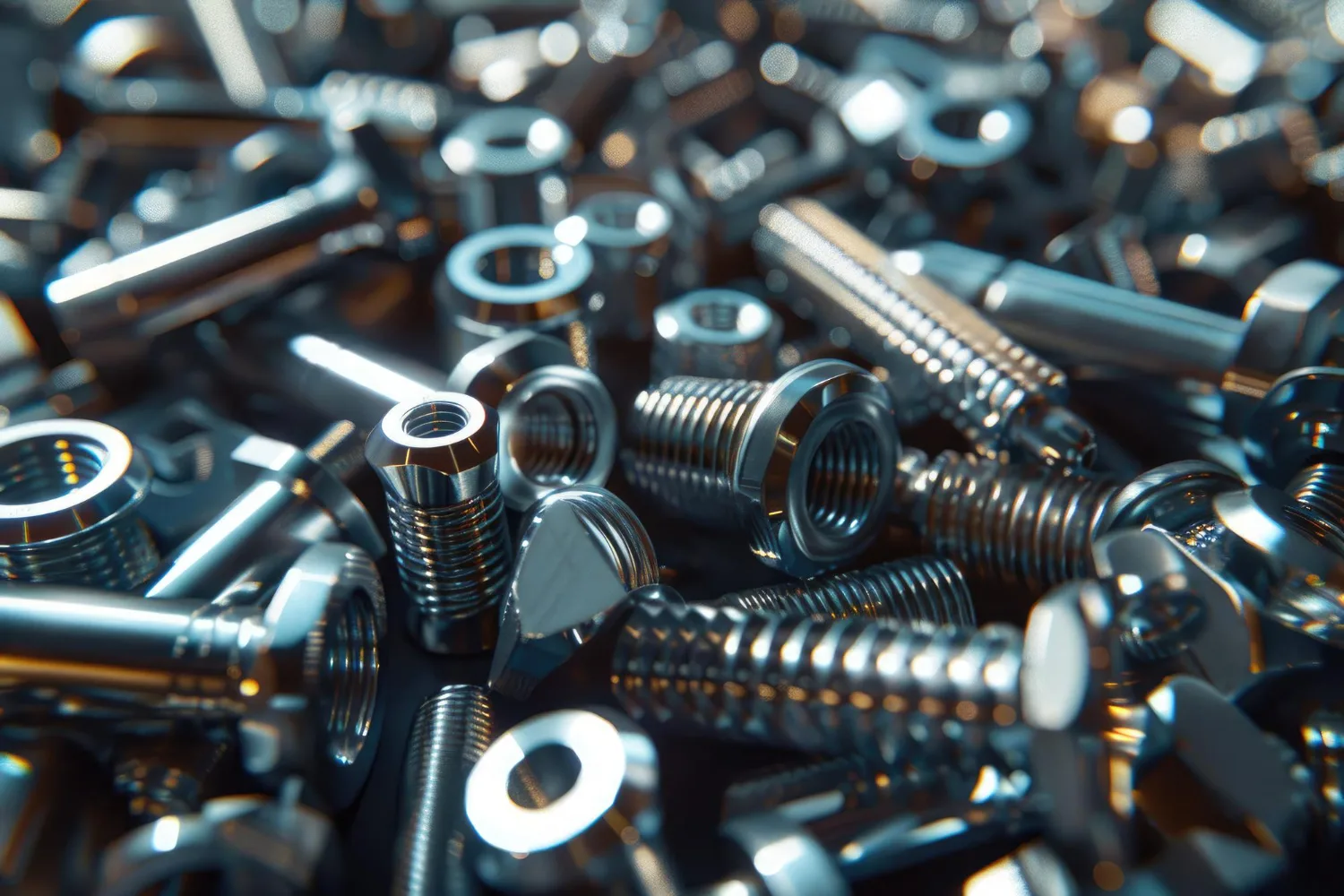
A bolt is an externally threaded fastener designed to pass through an unthreaded hole and be secured with a nut on the other side. It's built to handle both tension and shear loads, which is what makes it the go-to choice for structural connections. Hex bolts, carriage bolts, and stud bolts each serve slightly different load and application requirements. Bolts are used across construction, heavy machinery, pipeline flange connections, and structural steel assemblies.
Screws
Screws differ from bolts in that they thread directly into the material itself, without needing a nut to complete the joint. Machine screws work in precision equipment where metal-to-metal contact is needed, while self-tapping screws cut their own thread as they go, eliminating the need for a pre-drilled hole. The variety of screw types makes them one of the most versatile types of fasteners across industries. Screws are used in machinery assembly, sheet metal work, equipment enclosures, and precision manufacturing.
Nuts
A nut is an internally threaded fastener that pairs with a bolt or threaded rod to clamp parts together. Hex nuts are the most common, but lock nuts and flange nuts are widely used in applications where vibration could loosen a standard connection over time. The right nut isn't just about thread size; it's about matching the load, material, and environment. Nuts are used in structural assemblies, industrial machinery, pipe flanges, and high-vibration equipment.
Washers
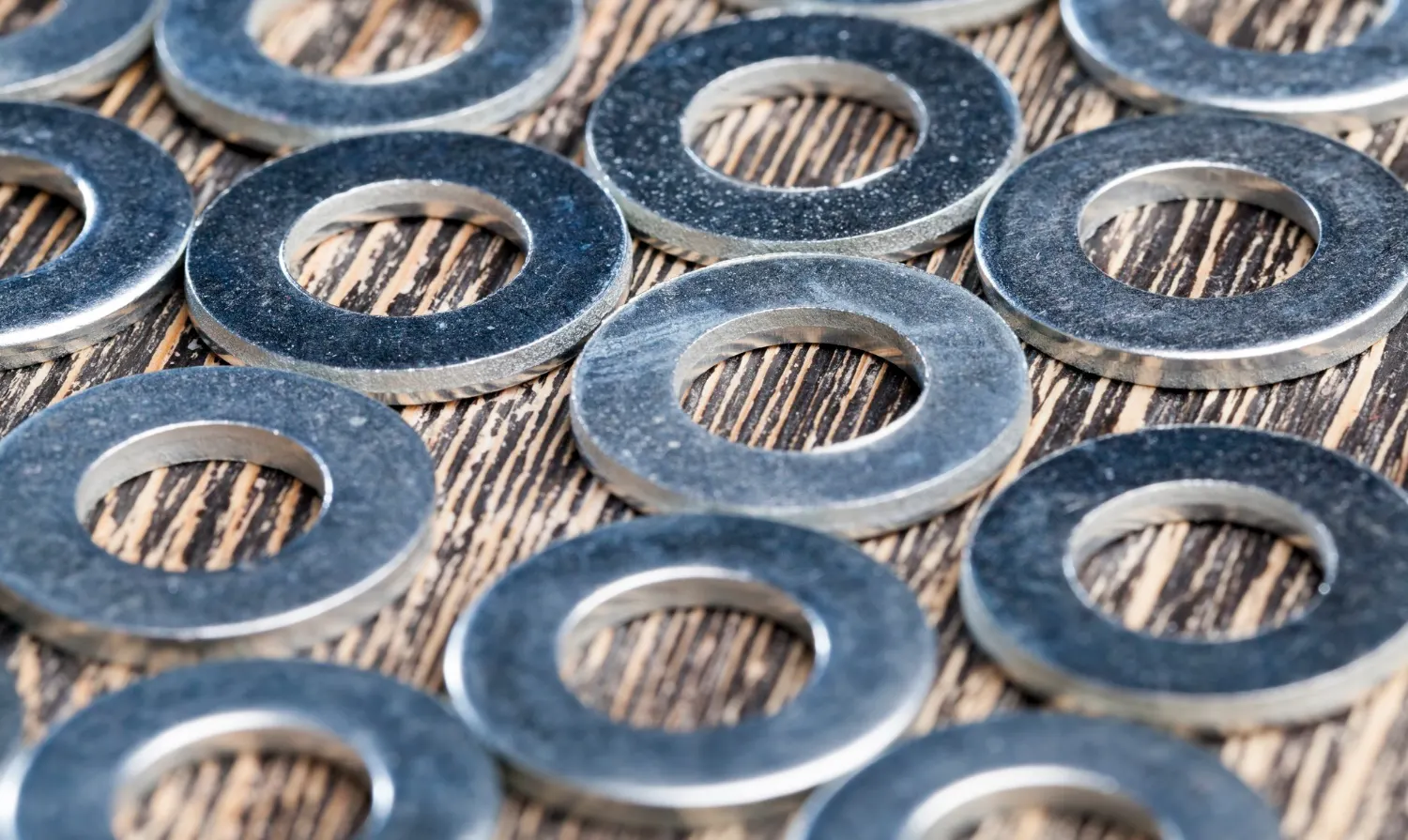
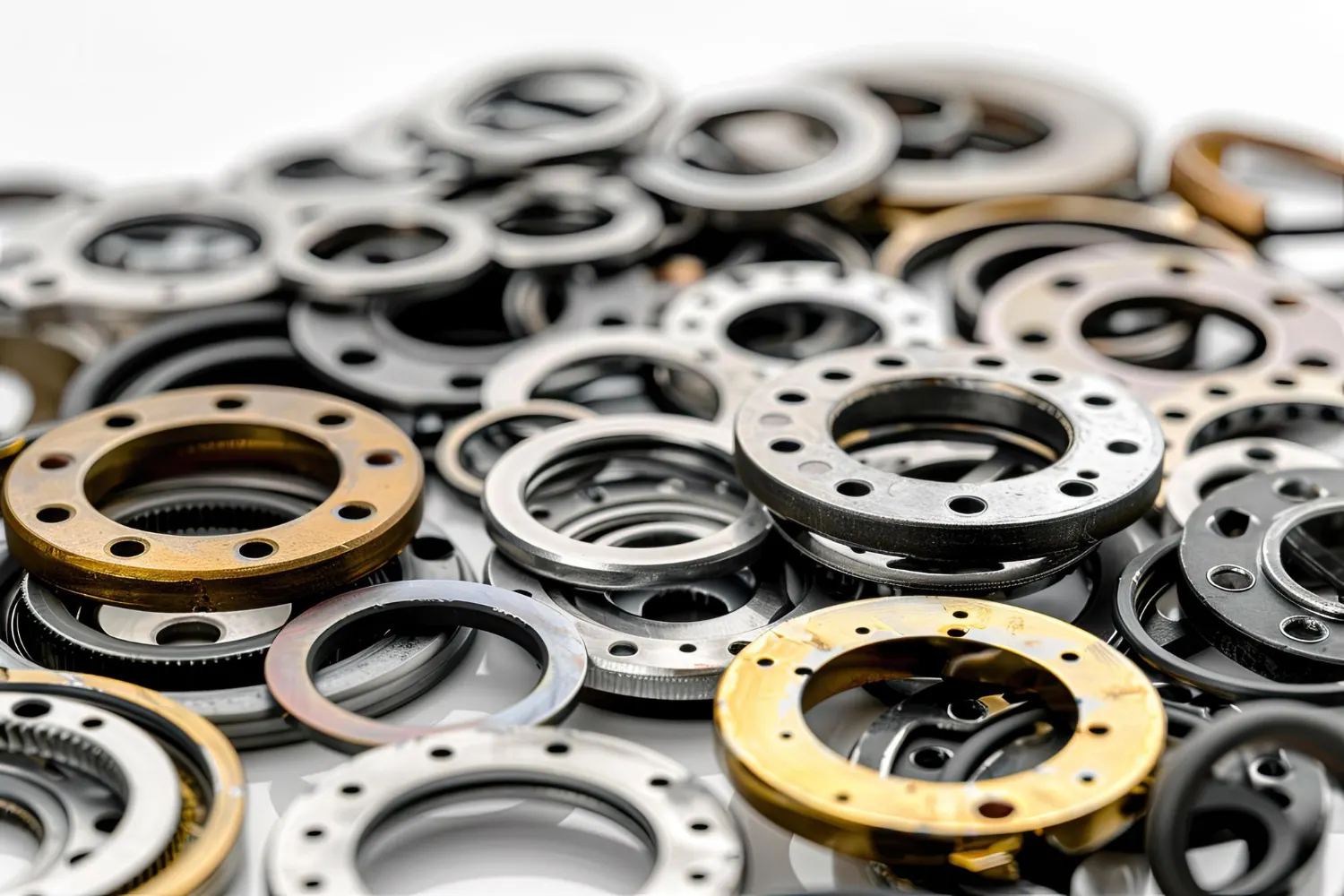
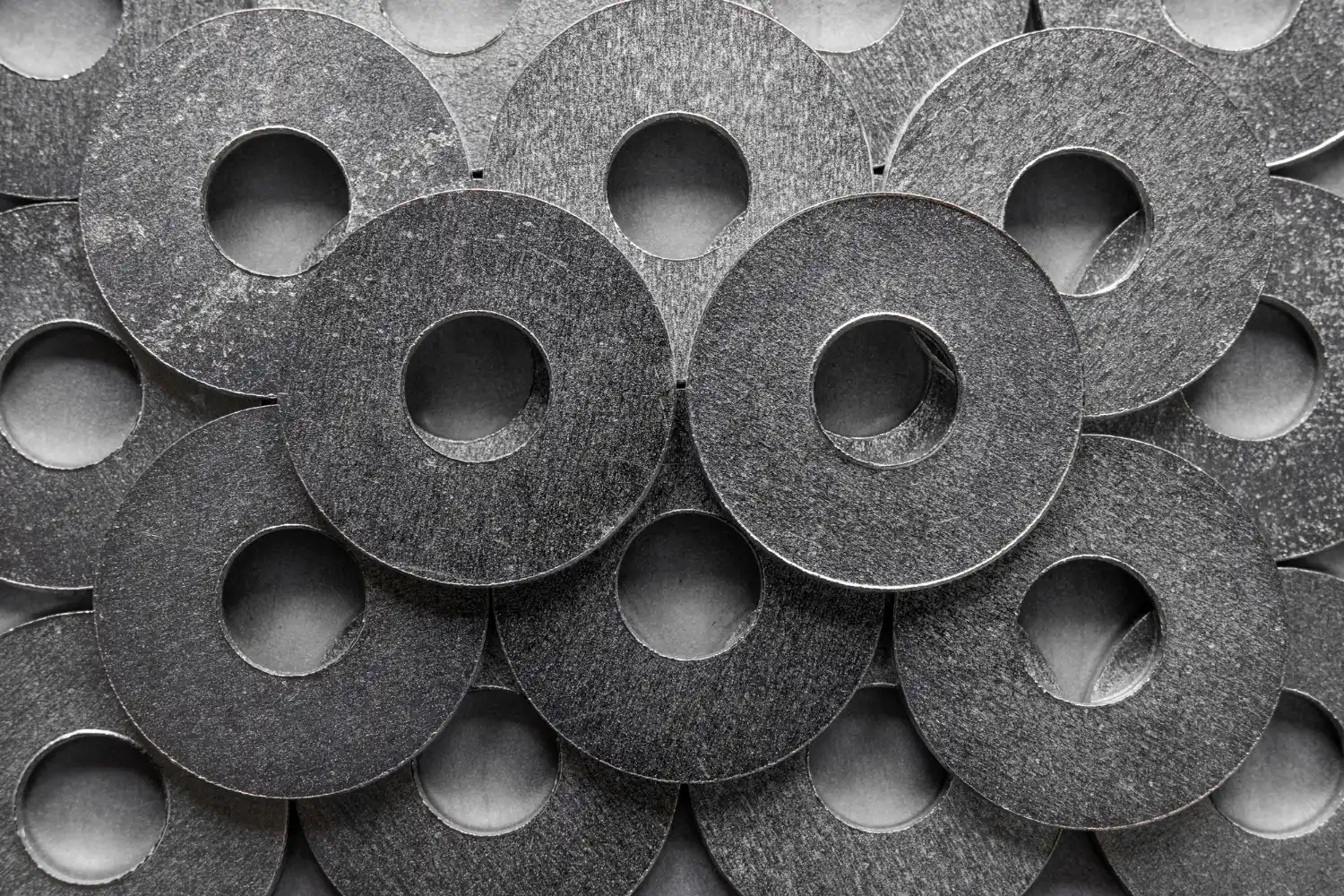
A washer sits between a fastener head or nut and the surface it bears against, distributing the clamping load over a wider area. Flat washers protect surfaces from damage, while spring and lock washers add tension to resist loosening under vibration. Choosing the right washer type matters as much as choosing the right bolt grade. Washers are used in construction, rotating machinery, automotive assemblies, and any application where load distribution or vibration resistance is a priority.
Fastener Materials Used in Industrial Environments
The material a fastener is made from determines how it behaves under load, heat, moisture, and chemical exposure. Get the material wrong and even the right fastener type will underperform. Here's a quick breakdown of the four most common materials used in industrial settings:
- Carbon Steel: The most widely used fastener material globally, accounting for roughly 80 to 90 percent of industrial fastener output. It offers high tensile strength and is cost-effective for general-purpose structural and mechanical applications where direct environmental exposure is limited.
- Stainless Steel: The preferred choice where corrosion is a primary concern, including outdoor environments, water treatment, food processing, and chemical plants. Grade 304 and 316 stainless fasteners are the most common, with 316 offering superior resistance in marine and chloride-heavy environments.
- Alloy Steel: Made by adding elements like chromium, molybdenum, or manganese to steel, alloy fasteners deliver higher hardness and tensile strength than standard carbon steel. They are widely used in high-stress structural applications, heavy equipment, and oil and gas environments where elevated loads and temperatures are a factor.
- Brass & Bronze: These copper-based alloys offer good corrosion resistance, easy machinability, and are commonly used in electrical, plumbing, and marine applications. Bronze in particular performs well in seawater environments, making it a go-to material for offshore and marine engineering.
How to Choose the Right Fastener
Start with the environment: is there moisture, chemical exposure, heat, or vibration? That alone will narrow your material choice significantly. Then consider the load type the joint needs to handle, whether it's tension, shear, or both, and match the fastener type accordingly. If you're working with fastener suppliers, always specify the application conditions upfront, not just the size and thread pitch.
Conclusion
Industrial fasteners are not commodity items you buy on price alone. The type, material, grade, and coating all have a direct impact on how long a joint holds, how it performs under stress, and whether it survives the conditions it's installed in. Getting this right from the start saves money, reduces maintenance, and keeps the people working around that equipment safe.
Alkun Steel stocks a wide range of fasteners in UAE suited for industrial, oilfield, and construction applications across the region. As experienced fastener suppliers in the UAE, we don't just ship products; we help you identify the right specification for your project before anything is ordered. Reach out to us, and we'll get you what you need.
FAQs
1. What are industrial fasteners used for?
Industrial fasteners are used to join, secure, and position components in structures, machinery, pipelines, and equipment while allowing for maintenance and disassembly when needed.
2. What is the difference between a bolt and a screw?
A bolt is typically used with a nut to secure components through an unthreaded hole, while a screw threads directly into the material without requiring a nut.
3. Which fastener material is best for corrosion resistance?
Stainless steel is one of the most corrosion-resistant fastener materials, making it ideal for marine, outdoor, water treatment, and chemical processing applications.
4. Why are washers important in industrial assemblies?
Washers help distribute clamping force, protect surfaces from damage, and reduce the risk of loosening caused by vibration and movement.
5. How do I choose the right industrial fastener for my application?
Consider factors such as load requirements, environmental conditions, corrosion exposure, temperature, vibration, and the materials being joined before selecting a fastener.
Related Articles
Valves Used in District Cooling Systems: Types, Functions, and Selection Criteria
Read More
Threaded vs Socket Weld vs Butt Weld Fittings: Which Is Right for Your Project?
Read More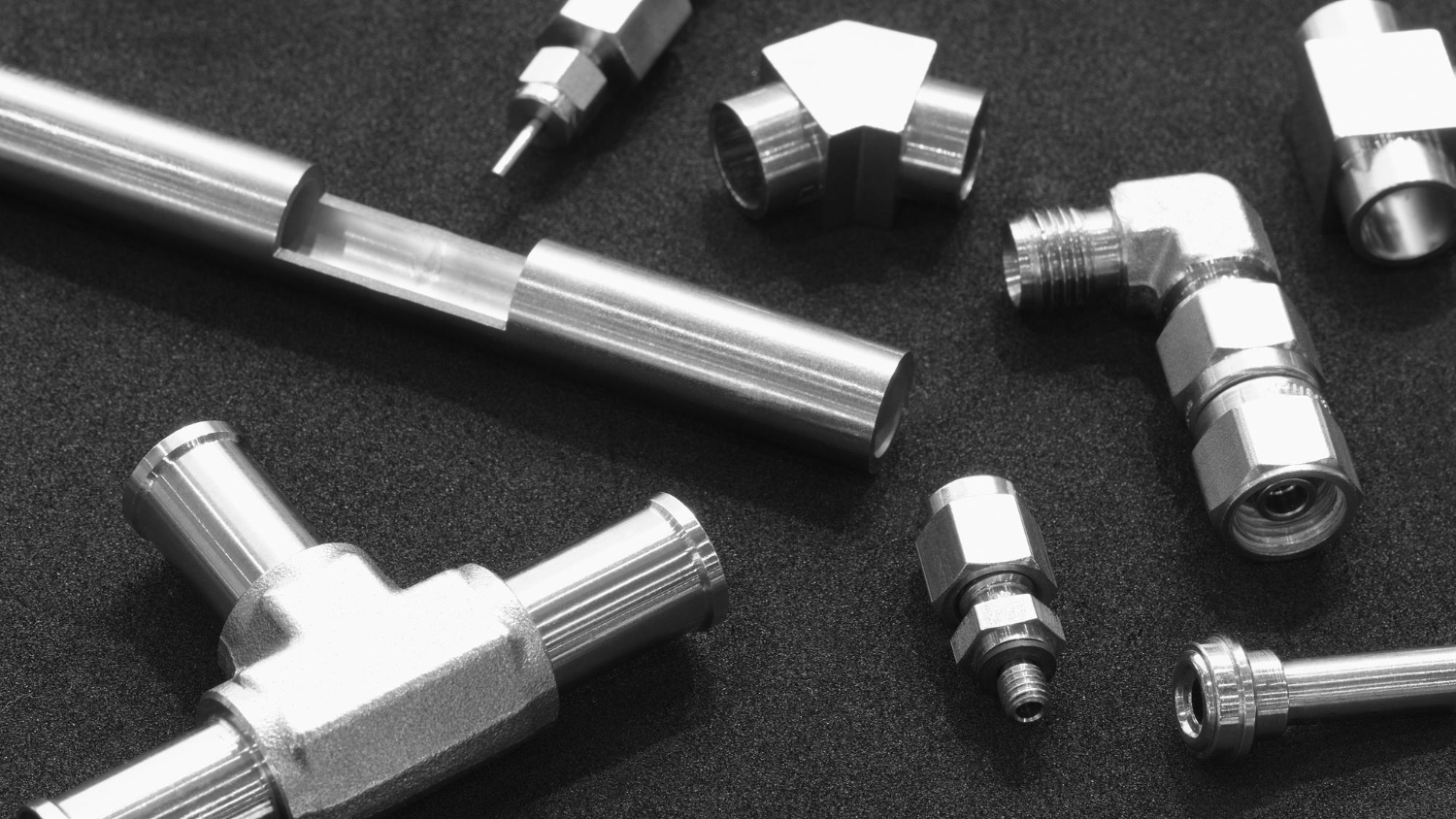
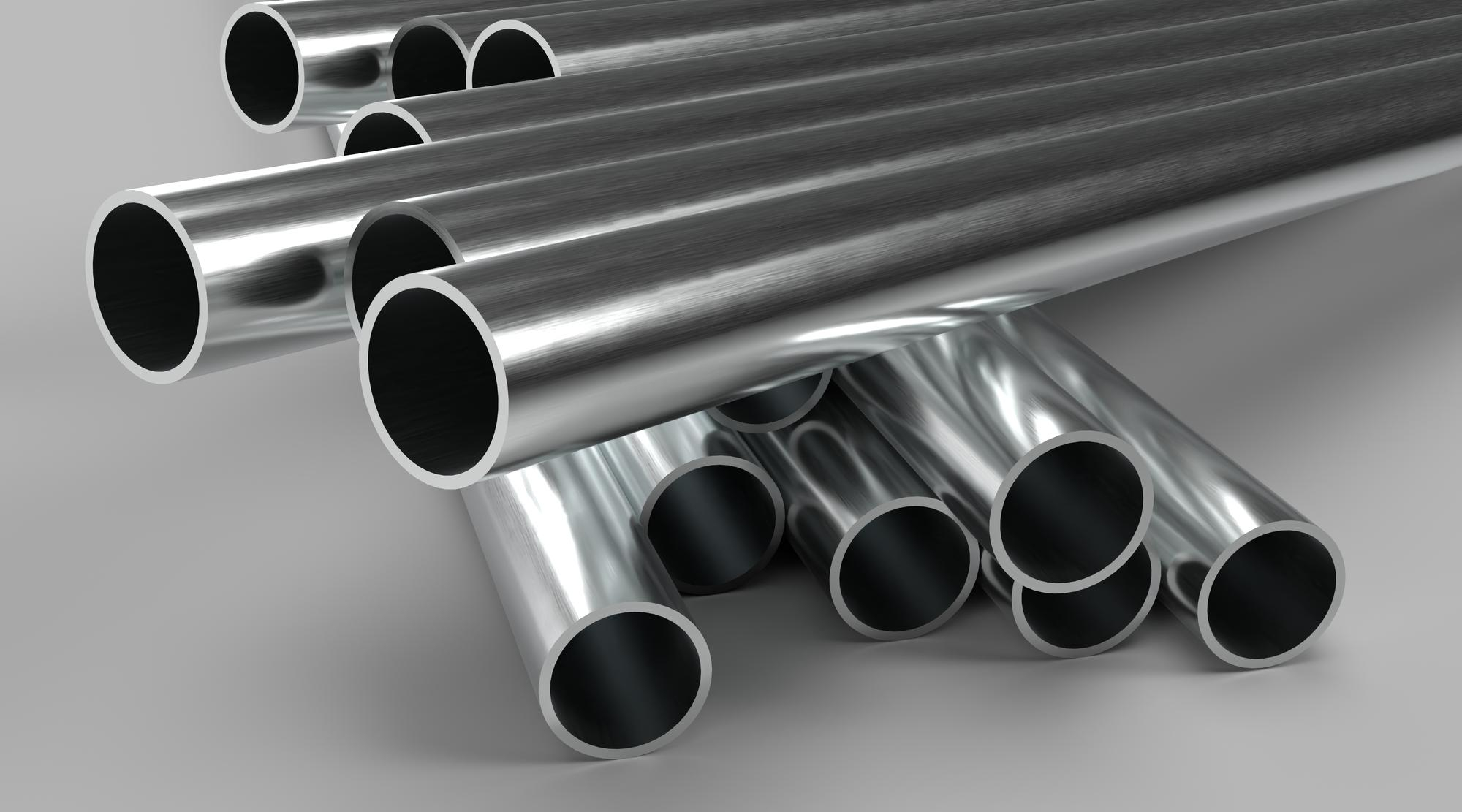
Carbon Steel vs Stainless Steel Pipes: Cost, Performance, and Application Comparison
Read More

How Fire Fighting Valves Ensure Safe and Efficient High-Pressure Water Systems
Read More



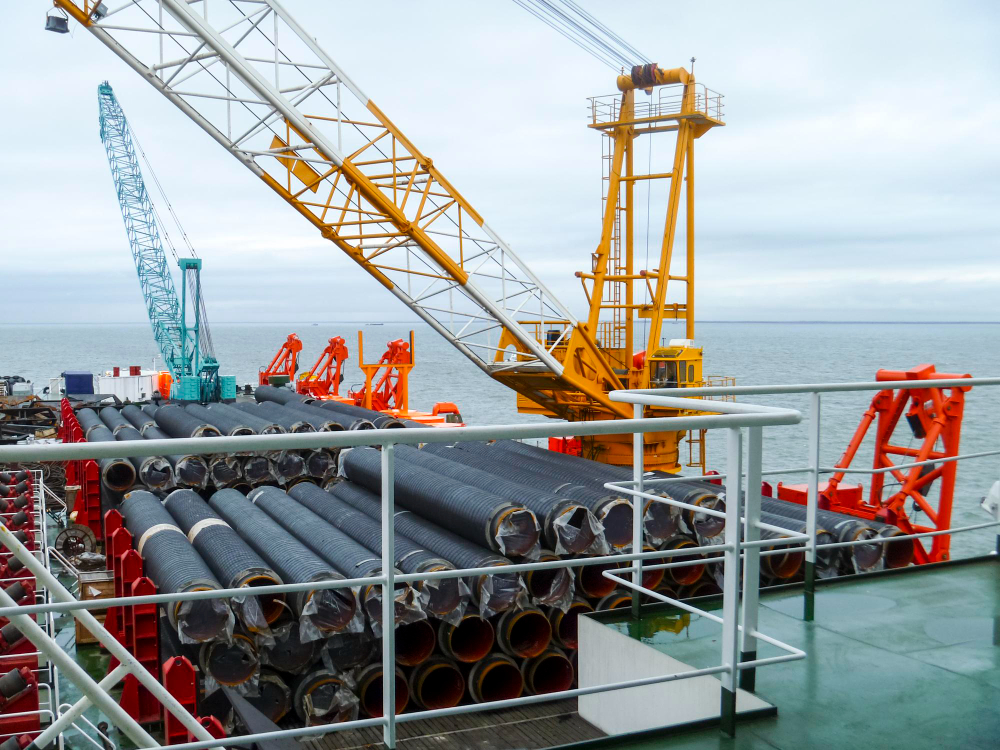
Stainless Steel Buttweld Fittings For Offshore Shipbuilding And Platform Piping
Read More
Industrial Valves, Hoses & Gaskets: Alkun Steel’s Solutions for the Tanks & Pumps Industry
Read More
Corrosion-Resistant Valves, Flanges & Joints: Alkun Steel’s Petrochemical Solutions
Read More
Why Alkun Steel Is A Reliable Supplier Of Essential Products In The Oil Drilling & Rig Industry
Read More

Reliable Industrial Components For Fire Fighting Applications: Alkun Steel’s Trusted Solutions
Read More
Why Alkun Steel Is A Reliable Supplier Of Essential Products In The Fabrication Industry
Read More
Industrial Valves, Hoses & Gaskets: Alkun Steel’s Solutions For Aviation Maintenance
Read More

Best Weld Neck, Slip-On, And Blind Flanges For Critical Oil & Gas Connections
Read More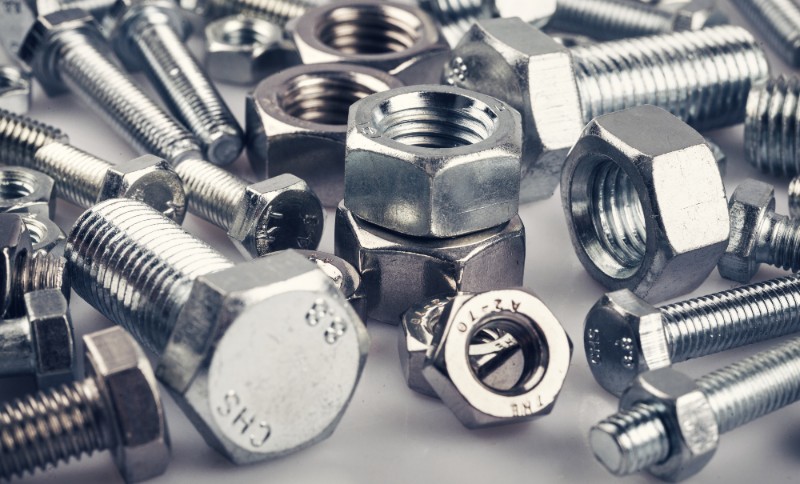
Best Industrial Fasteners for Heavy Equipment Assembly and Structural Steel Projects
Read More