How to Choose the Right Steel Sections for Fabrication Projects
Walk into any fabrication yard, and the same question comes up sooner or later. Of all the steel sections on the market, which one belongs in this job? The answer affects your cost, your welding time, and how the finished structure behaves under load.
Getting it right is not about memorising profiles. It comes down to knowing what each shape does well, matching it to the load and checking a few details before you order. At Alkun Steel, we see the same handful of mistakes in enquiries, so this guide is built around them. We cover the main types of steel sections for fabrication, how to size them, and what to watch for before you buy.
What Are Steel Sections and How Are They Used in Fabrication?
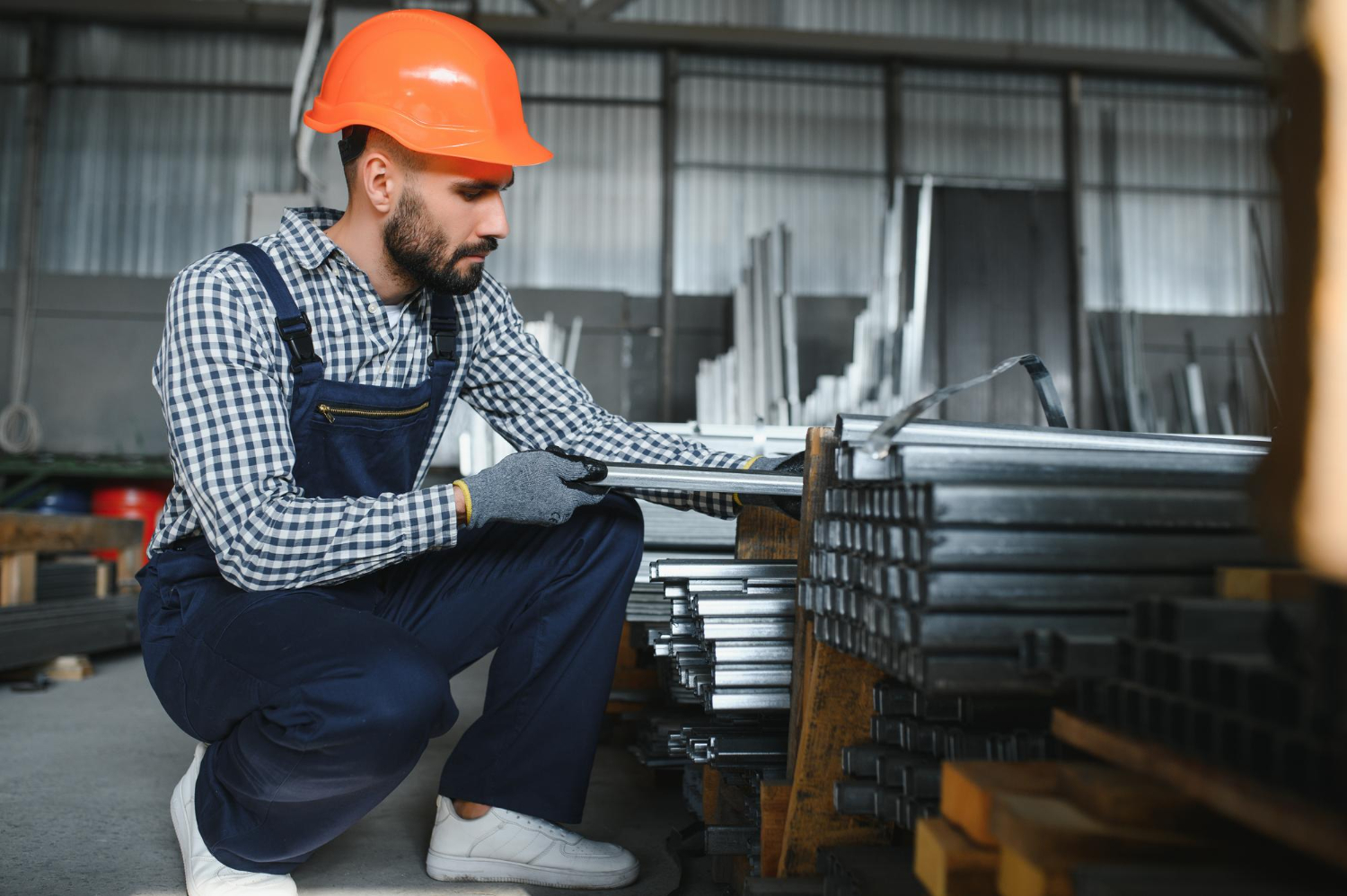
Steel sections are rolled or formed lengths of steel with a fixed cross-section. The shape does the heavy lifting. A deep I-profile resists bending, a closed box resists twisting, and a flat plate gives you surface to build from. In fabrication, these profiles get cut, drilled, and welded into frames, platforms, supports, tanks, and machine bases.
The ones that carry primary load are called structural steel sections, and they sit at the centre of structural steel fabrication. Lighter profiles take care of bracing, brackets and secondary supports. Whatever job a section does, its shape decides your connection details, your lifting weights and how long the welding takes.
What Are the Different Types of Steel Sections Used in Fabrication?
Most fabrication work draws from a small family of profiles. Each one does a particular job better than the rest.
Here is a quick look at what each one offers.
I-Beams and H-Beams
These are the usual choice of steel beams for fabrication when bending is the main load. I-beams have narrower, tapered flanges and work well for spans where weight matters, while H-beams have wider, parallel flanges and handle columns and heavier loads better.
Steel Channels
A channel has a flat back and two short flanges, so it sits neatly against another surface for bolting or welding. You will see it in purlins, frames, truck chassis and bracing. It is not symmetrical, which means it tends to twist under load unless it is restrained or paired back to back.
Steel Angles
Angles are L-shaped, with equal or unequal legs. They suit bracing, edge framing, supports and light frames where you need a strong corner without much fuss. They are easy to cut and weld, which is why they turn up on almost every job.
Square, Rectangular and Circular Hollow Sections
Steel hollow sections are closed profiles, so they resist twisting far better than open shapes. Square and rectangular hollow sections are often chosen to resist twisting for exactly this reason. Use them for columns, trusses, handrails and exposed work, and plan your welded joints with care.
Steel Plates, Flats and T-Sections
Steel plates for fabrication form base plates, gussets, stiffeners, and tank shells, while flats do similar work in narrower strips. T-sections, often cut from beams, go into lighter framing and stiffening. Thickness and grade matter more than shape here, so state both clearly when you order.
How to Choose the Right Steel Section for a Fabrication Project
The smartest way of choosing steel sections is to start from the load, not the catalogue. Ask what the member has to carry and how. Is it bending like a beam, squeezed like a column, pulled like a tie, or twisted by an off-centre load? A section that suits one of these can be a poor fit for another, even when the sizes look similar.
Then bring in the realities of your workshop and site. Think about weld access, cutting time, surface finish, lifting weight, and what is actually in stock. As a rough guide, hollow sections suit twisting loads and exposed work, H-beams suit columns, and channels and angles suit secondary framing. Weigh those against cost, and the choice usually narrows quickly.
How to Select the Correct Steel Section Size
Section size comes from design calculations, not guesswork. Depth mainly controls bending, flange width helps stability, and thickness protects against local buckling. Your structural engineer will work out the size from the loads, spans, and support conditions. Dropping to a smaller section to save money is the fastest way to create a bigger bill later.
Once you have a size, check it against what is available. Look at weight per metre, standard lengths, and whether your supplier carries that exact profile. Leave room for connections, because a bolt or weld that does not fit costs more than a heavier section. If your design lands between two sizes, go up to the next one and confirm the tolerances.
What to Check Before Buying Steel Sections for Fabrication
Start with the paperwork. Confirm the grade, the standard it is made to, and whether the supplier can provide mill test certificates linked to heat numbers. These documents tell you the steel matches your specification, and they matter most on load-bearing work. If the supplier hesitates, take that seriously.
Then look at the material itself. Check dimensions, straightness, surface condition, and rust, and confirm that the full quantity comes from the same batch. Ask about lead times, cutting to length, and any coating you need, such as galvanizing. A short call with your supplier before ordering can save weeks of rework on site.
Common Mistakes to Avoid When Choosing Steel Sections
Most section problems start with a quick decision made under time pressure. They are easy to make and expensive to fix once steel is on site.
Watch out for these.
- Choosing a section based only on its shape or appearance.
- Assuming I-beams and H-beams are interchangeable.
- Selecting dimensions without considering structural design requirements.
- Ignoring the steel grade and weldability requirements.
- Overlooking torsional behaviour when selecting open sections.
- Not considering connection and welding access.
Conclusion
The right section is the one that suits the load, fits your fabrication process and arrives with the paperwork to prove it. Shape is only the starting point. Size, grade, weldability and connections all play a part, and skipping any of them tends to show up later as cost or rework.
If you are lining up your next project, take this guide to your design team and check each point against your drawings. We are always glad to talk through sections, stock, and documentation with you, so send us your requirements, and we will help you narrow it down.
FAQs
1. How do I choose the right steel sections for fabrication?
Start from the load type and span, then match the section's shape, size, grade and weldability to it.
2. What are the different types of steel sections used in fabrication?
The main types are I-beams, H-beams, channels, angles, hollow sections, plates, flats and T-sections.
3. Which steel section is best for fabrication projects?
There is no single best section, because the right one depends on the load, span and connection details.
4. What is the difference between I-beams and H-beams?
H-beams have wider, parallel flanges and suit columns and heavier loads, while I-beams have narrower, tapered flanges and suit lighter spans.
5.When should I use C channels for fabrication?
Use them for secondary framing, purlins and bracing where a flat back helps with bolting or welding.
6. Are hollow sections suitable for structural fabrication?
Yes, they work well for columns, trusses and twisting loads, provided the joints are designed and welded properly.
Related Articles
ADIPEC 2026 Sourcing Checklist: Fittings, Valves & Gaskets UAE Oil & Gas Buyers Should Shortlist
Read More
UAE Construction Pipeline 2027: Emerging Sectors Creating New Demand for Steel & Fittings
Read More

The Complete Buyer's Guide to Industrial Gratings: GI vs Stainless Steel vs Aluminium vs Ductile Iron
Read More

Chequered Plate Buying Guide: MS vs GI vs Stainless Steel Checker Plates Compared
Read More
C-Channel vs U-Channel: Sizes, Uses & How to Choose the Right Structural Steel Channel
Read More

Valves Used in District Cooling Systems: Types, Functions, and Selection Criteria
Read More
Threaded vs Socket Weld vs Butt Weld Fittings: Which Is Right for Your Project?
Read More
Carbon Steel vs Stainless Steel Pipes: Cost, Performance, and Application Comparison
Read More


How Fire Fighting Valves Ensure Safe and Efficient High-Pressure Water Systems
Read More



Stainless Steel Buttweld Fittings For Offshore Shipbuilding And Platform Piping
Read More
Industrial Valves, Hoses & Gaskets: Alkun Steel’s Solutions for the Tanks & Pumps Industry
Read More
Corrosion-Resistant Valves, Flanges & Joints: Alkun Steel’s Petrochemical Solutions
Read More
Why Alkun Steel Is A Reliable Supplier Of Essential Products In The Oil Drilling & Rig Industry
Read More

Reliable Industrial Components For Fire Fighting Applications: Alkun Steel’s Trusted Solutions
Read More
Why Alkun Steel Is A Reliable Supplier Of Essential Products In The Fabrication Industry
Read More

Industrial Valves, Hoses & Gaskets: Alkun Steel’s Solutions For Aviation Maintenance
Read More

Best Weld Neck, Slip-On, And Blind Flanges For Critical Oil & Gas Connections
Read More
Best Industrial Fasteners for Heavy Equipment Assembly and Structural Steel Projects
Read More